Types of salt therapy — and why an active room is different
Salt therapy can be wet or dry, underground or above ground, active or passive. Our salt room in Doncaster is an active halotherapy room: a halogenerator disperses dry salt into the air throughout every session.
Wet and dry salt therapy
Salt therapy broadly falls into two categories. Wet salt therapy covers things like saline solutions, salt baths and salt scrubs — familiar to most people, even if they've never heard the term. Dry salt therapy takes place in a space kept free of moisture, often called a salt room, salt cave or salt chamber depending on how it's decorated.
Halotherapy and speleotherapy
Within dry salt therapy there are two approaches, as the Salt Therapy Association outlines: speleotherapy, which takes place underground in natural salt caves and mines, and halotherapy, which recreates a similar environment above ground using a halogenerator.
Active rooms and passive rooms
| Active salt room | Passive salt room | |
|---|---|---|
| Halogenerator | Yes — disperses a fine, dry salt aerosol | No |
| Salt in the air | Yes, throughout the session | No aerosol is dispersed |
| What it is | Halotherapy | A salt-decorated relaxation space |
Passive rooms can still be lovely, calm spaces — but they aren't halotherapy in the technical sense.
Halotherapy at Pure Salt Therapy
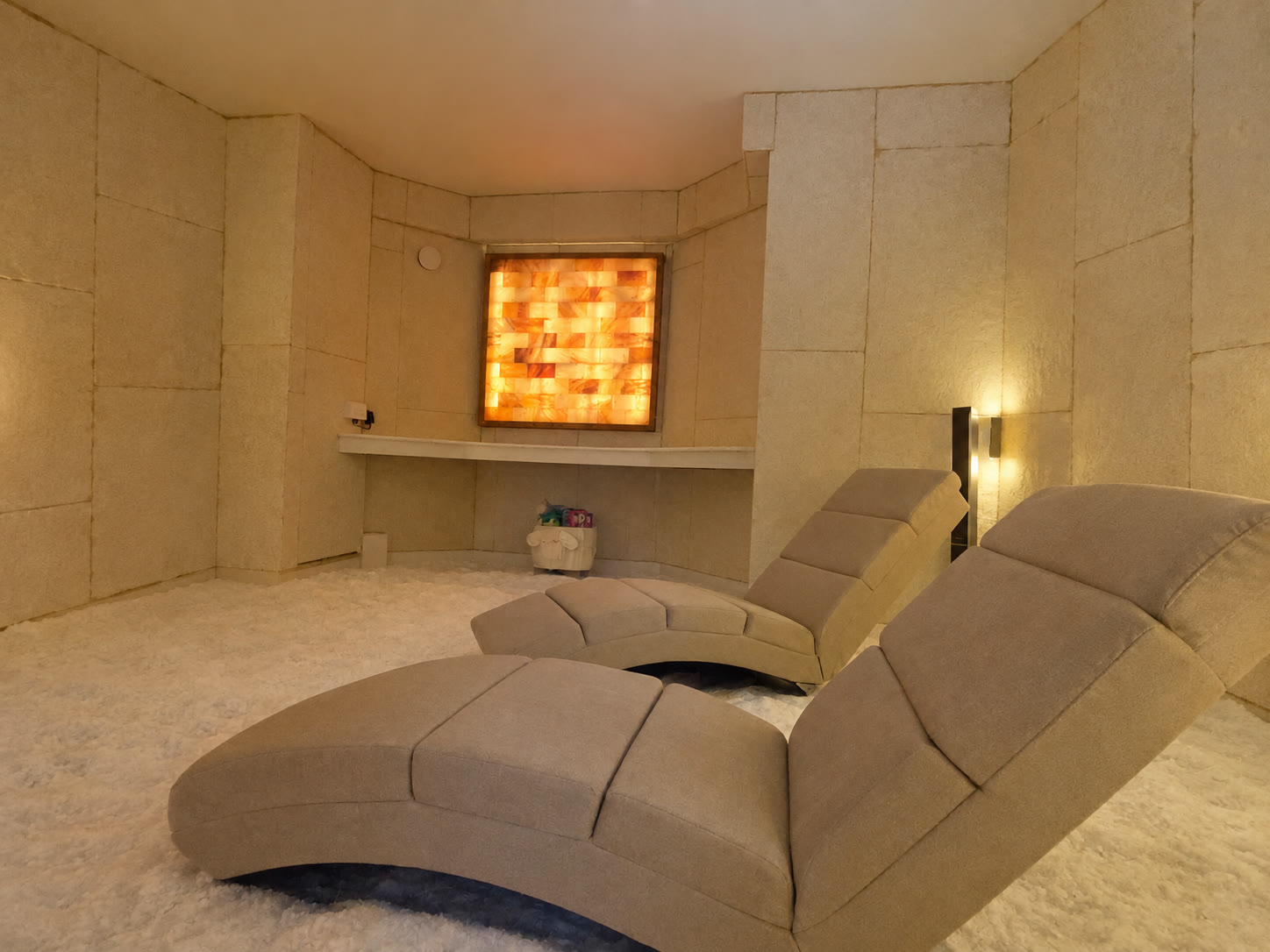
Our salt room is an active halotherapy room, fitted with a professional halogenerator that uses pharmaceutical-grade Pharmasal salt from Salinen Austria. Every session includes the dry salt aerosol, not just the look of a salt room.
Related links
Halotherapy is a complementary wellbeing practice, not a medical treatment. It does not diagnose, treat or cure any condition and is not a substitute for advice from your GP. Please do not stop or change prescribed medication. If you have a health condition, speak to your doctor before booking.